
Christ at the centre
Prayer, Scripture, sacramental life and the person of Jesus Christ should be woven through the life of the school, not confined to religious education classes.
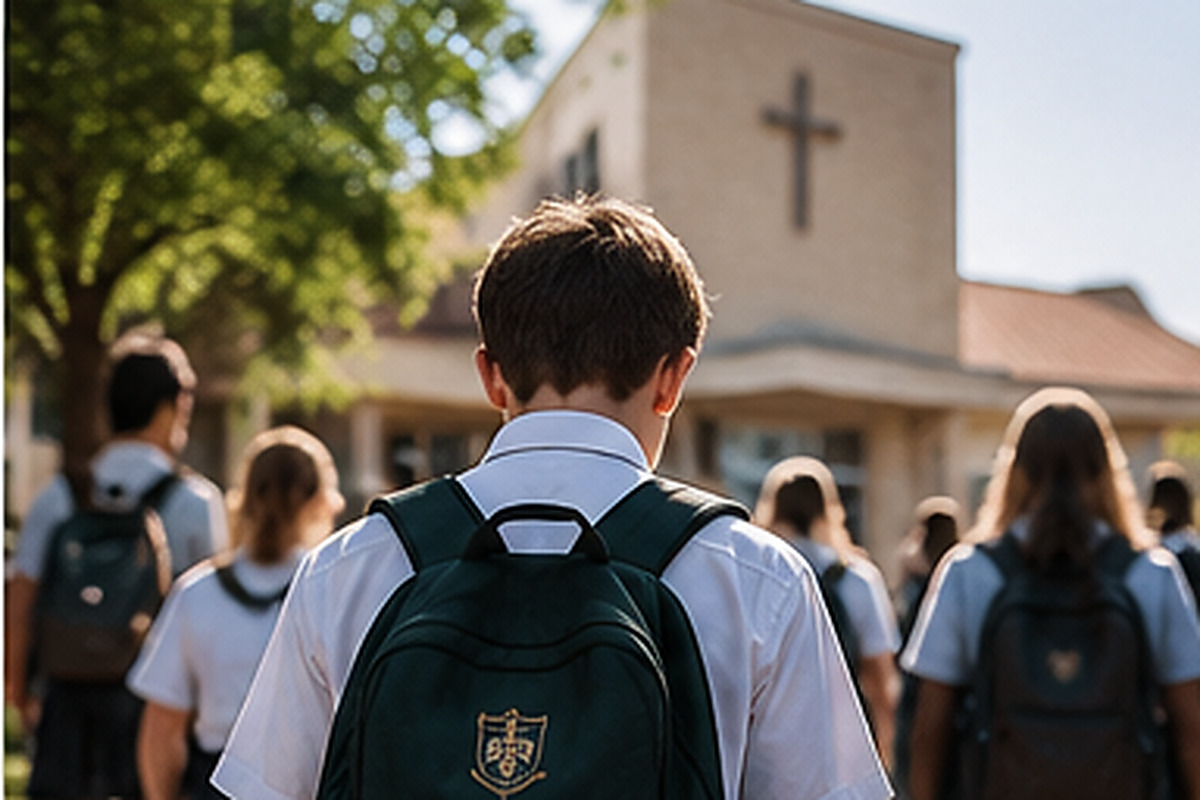
Form young people in Christ, truth and wisdom.
Catholic education should do more than provide excellent schooling with a religious atmosphere. It should form young people who know Jesus Christ, understand the Catholic faith, can reason about truth, grow in virtue and are prepared to live as Catholics in Australian society.
A Catholic school should be unmistakably Catholic — in identity, teaching, worship and mission.
Catholic education exists to form the whole person in the light of Christ. Academic excellence and Catholic identity belong together; neither is a substitute for the other.
Why this matters now
A Catholic school cannot rely on its name, history or symbols alone. Its Catholic identity must shape what is taught, how the human person is understood, how staff lead, how students pray and how the community lives.
Dialogue with the wider culture is important, but genuine dialogue requires a clear identity. Young Catholics deserve an education confident enough to explain what the Church believes and why.
Prayer, Scripture, sacramental life and the person of Jesus Christ should be woven through the life of the school, not confined to religious education classes.
Schools should strengthen, not replace, the role of parents in the faith and moral formation of their children.
Those entrusted with Catholic formation should understand the faith, live consistently with the mission and be equipped to explain it.
Students should learn to pursue truth with intellectual seriousness and to see that faith is not opposed to science, reason or rigorous inquiry.
The line we must hold
Religious education should communicate the actual content of Catholic faith, not only values or comparative religion.
School liturgy and prayer should introduce students to reverent Catholic worship and the sacramental life of the Church.
Human sexuality, dignity, marriage, life and conscience should be taught through a coherent Catholic anthropology.
Formation should aim beyond graduation: students should leave able to explain, defend and live their faith.
What we propose
Require every Catholic school to demonstrate how Catholic mission shapes leadership, curriculum, worship, staffing and student formation.
Ensure teachers responsible for religious education are properly formed in Scripture, doctrine, moral theology and Catholic anthropology.
Create practical structures that help parents understand what is taught and equip them to lead faith at home.
Make the relationship between school, parish, Sunday Mass and the sacraments visible and practical.
Prepare students to understand and articulate Catholic teaching on life, marriage, sexuality, gender, technology, justice and freedom.
Assess whether students actually know the faith, practise it and can explain it — not merely whether programs were delivered.
Church teaching
Christian education and the distinctive mission of Catholic schools.
Clear Catholic identity, ecclesial mission and dialogue without ambiguity.
Parents as the first and principal educators of their children.
Faith should illuminate the whole educational enterprise.
CATHOLIC EDUCATION SHOULD NOT APOLOGISE FOR BEING CATHOLIC.