Dignity is intrinsic
A human being does not become valuable by being intelligent, productive, independent or useful. Human dignity belongs to the person by virtue of what he or she is.
Defend what it means to be human.
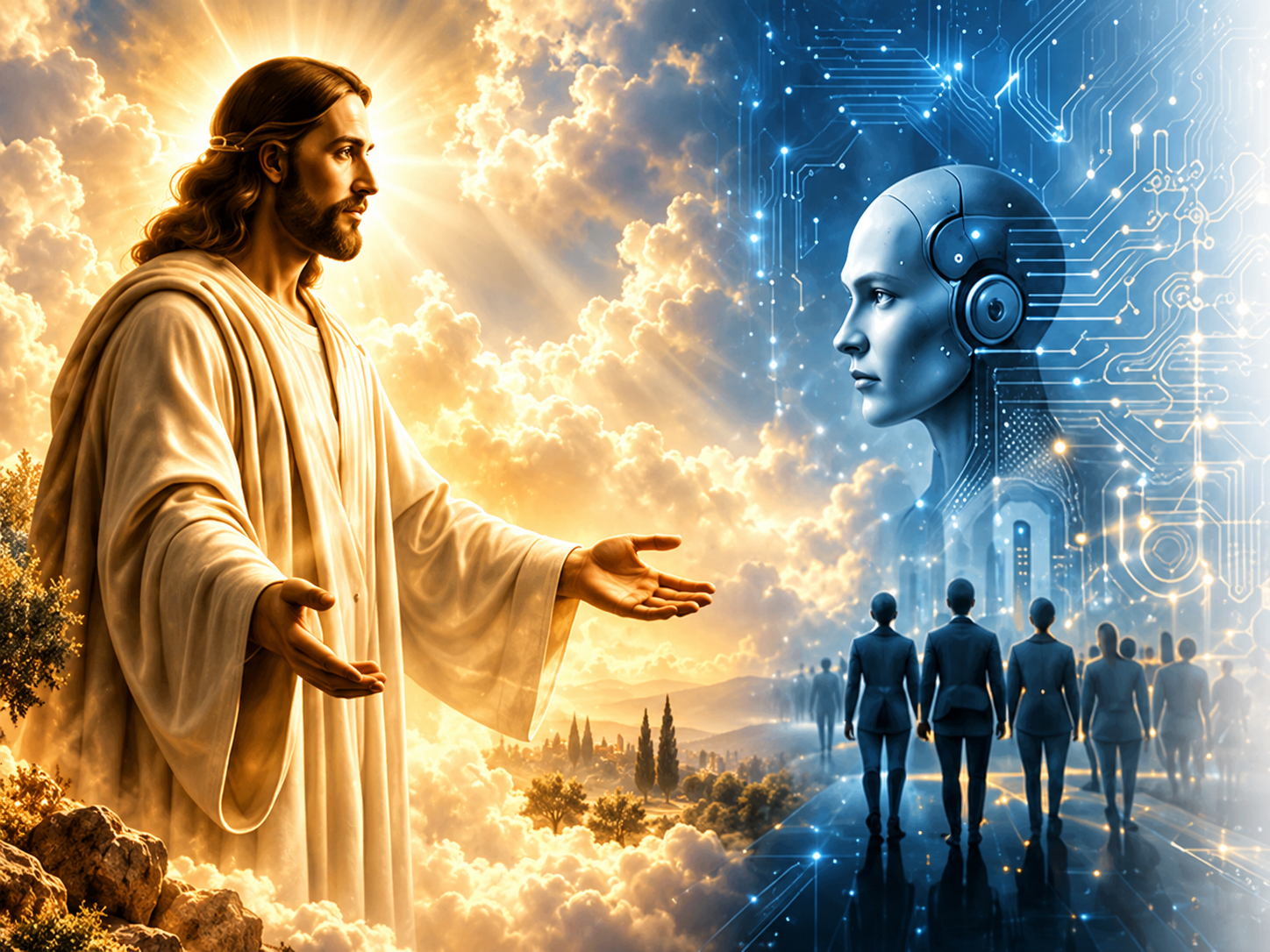
Artificial intelligence is only the beginning. As machines become more capable of imitating human speech, creativity, appearance and companionship, Australia will increasingly have to decide what makes a human person unique. Catholic teaching begins somewhere technology cannot reach: the human person is a unity of body and spiritual soul, created by God and called to an eternal destiny.
The Church should not arrive late to that argument.
Technology must remain ordered to the human person: a being of body and immortal soul, created by God and destined for eternity. The human person must never be redefined to accommodate technology.
Why this matters now
AI systems can already produce language, images and behaviour that resemble the products of human intelligence. The more convincing that imitation becomes, the easier it will be to confuse performance with personhood.
The Vatican's 2025 note Antiqua et nova is explicit: AI must be understood as "a tool, not a person." It also warns that anthropomorphising AI can blur the distinction between human beings and machines.
A human being does not become valuable by being intelligent, productive, independent or useful. Human dignity belongs to the person by virtue of what he or she is.
The human person is not biological hardware running sophisticated software. Each person is a unity of body and spiritual soul. The soul is created immediately by God and is immortal.
Machines can calculate and recommend. They do not bear moral responsibility. Human beings remain accountable for decisions and their consequences.
Human love, friendship, family and communion involve embodied persons who can freely give themselves to one another. Simulation is not reciprocity.
The deepest distinction
A Catholic account of the human person does not begin with intelligence, productivity or biology alone. It begins with a person created by God: body and spiritual soul, made in His image and called to eternal communion with Him.
The spiritual soul is not manufactured by parents, biology or computation. Catholic teaching holds that each soul is created immediately by God.
The soul does not perish when separated from the body at death. A human life therefore has a horizon no machine possesses: eternity.
Human beings are not destined merely to survive, optimise or replicate. We are called to judgment, resurrection and eternal life with God.
No increase in processing power, learning ability or human-like behaviour can manufacture an immortal soul or create the eternal destiny that belongs to the human person.
The line we must hold
Intelligence is not enough. A system may outperform a person in many tasks without becoming a human person.
Appearance is not enough. A robot may look, speak or react like us without sharing human nature.
Attachment is not enough. A person may feel affection for a synthetic companion without turning the machine into a person.
A soul cannot be engineered. A machine may imitate human intelligence or emotion, but complexity does not become an immortal spiritual soul.
Capability is not the measure of dignity. The weakest human being remains more than a machine of extraordinary capability.
Our destiny is eternal. Human life is ordered beyond death to judgment, resurrection and communion with God.
Before 2036
Should an artificial system ever be granted the legal or moral status of a person? On what basis?
What happens when children form attachments to systems designed to imitate friendship, affection or authority?
How should society respond when synthetic companions imitate romantic, sexual or marital relationships?
Where should robots assist the elderly, sick or isolated—and where must human presence never be replaced?
How far can technology alter the body before enhancement becomes a rejection of embodied human nature?
Who is morally and legally accountable when an AI system influences or makes a consequential decision?
The Church has no reason to fear genuine scientific or technological progress. The question is whether technology remains a tool at the service of the human person, human freedom, human relationships and the common good.
What we propose
Australian Catholic leaders should articulate a clear public doctrine of human uniqueness before technology forces the issue.
Schools, parishes and adult formation should teach what a human person is: body and immortal soul, made in the image of God and called to eternal life—not merely how to use AI responsibly.
AI must not become a moral shield behind which institutions hide consequential human decisions.
Set ethical limits where synthetic companionship threatens to displace essential human relationships, especially for children and vulnerable people.
Reject visions of progress that treat the body as obsolete, human nature as infinitely redesignable, or dignity as dependent on enhancement.
Bring Catholic anthropology into law, education, healthcare, technology policy and the national conversation.
Church teaching already gives us the foundation
AI, human intelligence, embodiment, moral responsibility and the warning not to confuse a tool with a person.
See especially §§16–20, 39–42, 59–60 2024Human dignity is intrinsic and inalienable, grounded in the human person's being and in the image of God.
See especially §§1, 17–18 CCC 362–368The human person is a profound unity of body and spiritual soul. The spiritual soul is created immediately by God and is immortal.
See especially CCC 362–368, including 366 CCC 1701–1706Human dignity, freedom and vocation are rooted in the person being created in God's image and called to communion with Him.
THE QUESTION IS NOT WHETHER MACHINES WILL BECOME MORE LIKE US.